Eos Energy (EOSE)

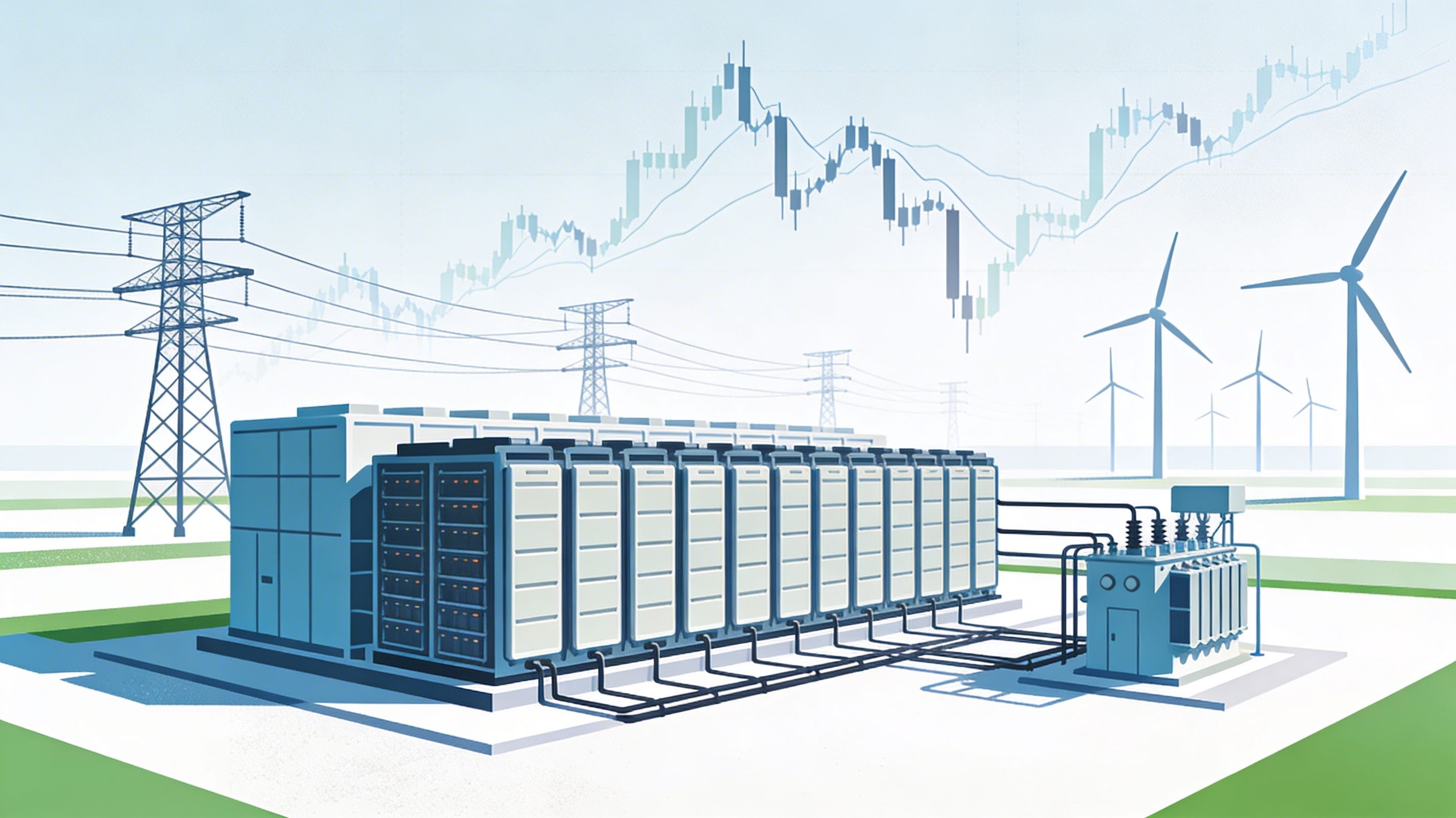
Eos Energy Enterprises (EOSE) is a high‑beta, early‑stage grid‑scale battery maker with rapidly growing revenue but a highly stressed balance sheet and substantial execution and dilution risk.
Business overview
Eos designs and manufactures zinc‑based long‑duration energy storage systems (Eos Z3) targeting utility‑scale, microgrid and commercial applications as an alternative to lithium‑ion. Its value proposition is focused on safety (non‑flammable chemistry), duration (4–10+ hours), and potentially lower lifecycle cost for grid applications. The company sells systems and related services into a growing pipeline of utility and renewable developer customers.
Recent operating performance
Eos has recently begun ramping commercial revenue but remains deeply loss‑making. Trailing‑twelve‑month revenue is about 63 million USD, up over 300% year‑on‑year, while net loss over the same period is roughly 2.0 billion USD and EPS is about −8.25. In Q3 2025, it reported 30.5 million USD of revenue, more than doubling the prior quarter and nearly doubling its full‑year 2024 revenue, but still generated a gross loss and a large adjusted EBITDA loss of about 52.7 million USD. Operating expenses for that quarter were about 27.3 million USD, down modestly versus the prior quarter, showing some cost discipline but not enough yet to approach breakeven. The company reaffirmed 2025 full‑year revenue guidance of 150–160 million USD and highlighted a commercial opportunity pipeline of about 22.6 billion USD and an order backlog of roughly 644 million USD.
Balance sheet and financing
The balance sheet is highly leveraged, with large liabilities and negative equity after repeated losses and financing transactions. Historical data show total assets of about 260 million USD at year‑end 2024 against total liabilities of about 842 million USD, implying common equity around −1.07 billion USD at that time. More recent commentary indicates total assets around 328 million USD versus total liabilities of roughly 1.43 billion USD by late 2025, consistent with continued negative shareholders’ equity and heavy use of debt and preferred or convertible instruments. Cash (including restricted cash) at Q3 2025 was about 126.8 million USD, giving some runway but not enough to reach scale without continued external financing if current burn persists. Given the negative equity and ongoing losses, equity raises and further dilution are a key risk for common shareholders.
Stock characteristics and sentiment
EOSE trades on Nasdaq, with a market capitalization around 3.6 billion USD and about 324 million shares outstanding, implying substantial dilution versus a few years ago. The stock has shown extreme volatility, with a 52‑week trading range of roughly 3.07 to 19.86 and a beta above 2, and it currently has no meaningful P/E since earnings are negative. Recent news includes large share sales by a major holder (Brightline) even after a sharp rally, as well as updates that the company will report Q4 and full‑year 2025 results in late February 2026. Analysts’ 2025 consensus estimates cited ahead of Q3 suggested revenue around 146–150 million USD and EPS of roughly −1.08, and Q3 EPS of −2.77 missed an already‑negative consensus of about −0.31, underlining forecast risk.
Key opportunities and risks
On the opportunity side, Eos is leveraged to structural growth in grid‑scale storage demand driven by renewables penetration, grid reliability needs, and policy support. Its zinc‑based chemistry could carve out a niche in long‑duration storage where lithium‑ion economics and safety are less attractive, and its 22.6 billion USD pipeline and 644 million USD backlog, if converted and executed, provide visibility for future growth. On the risk side, the company must scale manufacturing, improve variable costs, and reach positive gross margin while managing a very weak capital structure and substantial cash burn. High leverage, negative equity, and dependence on capital markets create material dilution and even solvency risk if execution stumbles or market conditions tighten. The stock’s extreme volatility and history of estimate misses mean that position sizing and risk management are critical for any investor considering exposure.
This is a general discussion for informational and educational purposes only and does not constitute financial, investment, or trading advice, and it should not be used as the basis for any investment decision; you should do your own research and consider your own financial situation, risk tolerance, and investment objectives, or consult a licensed financial professional before making any investment decisions.